Knowing yourself
Students look at their own emotions, values, and habits, and notice how those shape the choices they make at school and at home. They name strengths they can lean on and areas they want to grow.
This is the year self-awareness turns into self-direction. Students learn to name what they feel, manage stress under real pressure, and keep working toward goals that stretch past graduation. They practice listening to people whose lives look nothing like their own, holding hard conversations, and asking for help before things fall apart. By spring, students can talk through a tough choice by weighing the effect on themselves and the people around them.
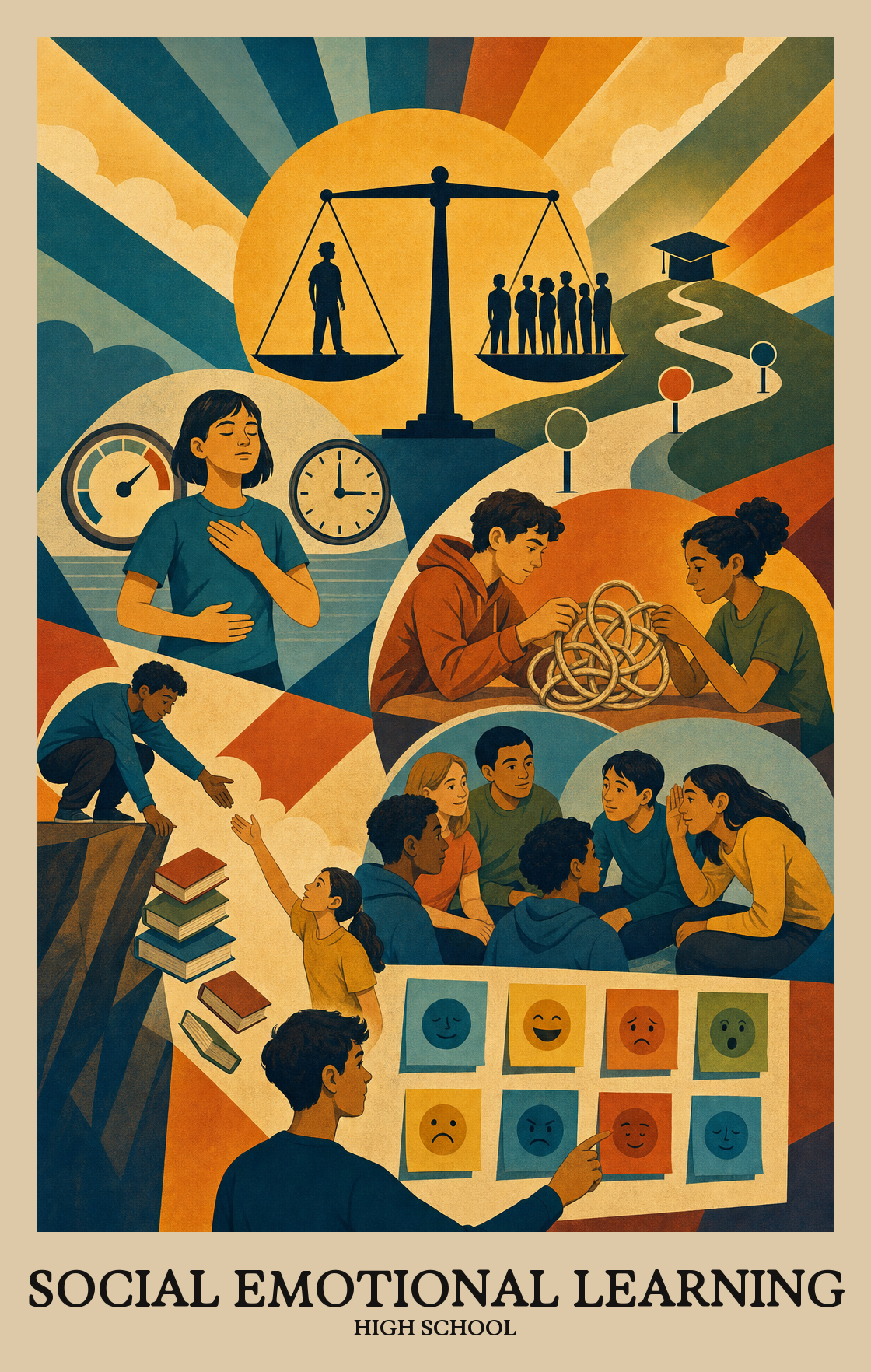
Students look at their own emotions, values, and habits, and notice how those shape the choices they make at school and at home. They name strengths they can lean on and areas they want to grow.
Students practice ways to handle stress, stay organized, and follow through on long-term goals like grades, jobs, or college plans. They learn to pause before reacting when things get hard.
Students work on seeing situations from other points of view, including people whose background or beliefs differ from their own. They also learn where to turn for help at school, at home, and in the community.
Students practice clear communication, teamwork, and working through disagreements without making things worse. They learn how to ask for help and how to offer it to a friend or classmate.
Students weigh the short and long term effects of a decision before acting, in everything from social media to friendships to safety. They consider how a choice lands for them and for the people around them.
Students learn to name their own emotions and recognize how those feelings shape their choices. They also get an honest look at what they're good at and where they still have room to grow.
Students practice staying calm under pressure, thinking before acting, and keeping track of responsibilities. These skills help them handle stressful moments and follow through on goals that matter to them.
Students practice seeing a situation through someone else's eyes, especially someone whose background differs from their own. They also learn to spot the people and resources around them at school, at home, and in their community who can help.
Students practice the skills that keep relationships healthy: listening well, working through disagreements, and asking for or offering help when someone needs it. This applies across friendships, group work, and interactions with people who are different from them.
Students practice thinking through real choices before acting, weighing what could go wrong and who might be affected. The goal is decisions that hold up, not just ones that feel easy in the moment.
| Standard | Definition | Code |
|---|---|---|
| The abilities to understand one's own emotions, thoughts High School | Students learn to name their own emotions and recognize how those feelings shape their choices. They also get an honest look at what they're good at and where they still have room to grow. | DE-SEL.1.9-12 |
| The abilities to manage emotions, thoughts High School | Students practice staying calm under pressure, thinking before acting, and keeping track of responsibilities. These skills help them handle stressful moments and follow through on goals that matter to them. | DE-SEL.2.9-12 |
| The abilities to understand the perspectives of and empathise with others… High School | Students practice seeing a situation through someone else's eyes, especially someone whose background differs from their own. They also learn to spot the people and resources around them at school, at home, and in their community who can help. | DE-SEL.3.9-12 |
| The abilities to establish and maintain healthy and supportive relationships… High School | Students practice the skills that keep relationships healthy: listening well, working through disagreements, and asking for or offering help when someone needs it. This applies across friendships, group work, and interactions with people who are different from them. | DE-SEL.4.9-12 |
| The abilities to make caring and constructive choices about personal behavior… High School | Students practice thinking through real choices before acting, weighing what could go wrong and who might be affected. The goal is decisions that hold up, not just ones that feel easy in the moment. | DE-SEL.5.9-12 |
Older students work on knowing themselves better, handling stress, getting along with people who are different from them, and making decisions they can stand behind. The work shows up in how students manage a hard week, a group project, or a disagreement with a friend.
Ask what is on their plate this week and help them pick what to do first. A short routine helps: sleep, a calendar on the fridge, and a quiet check-in at dinner about what went well and what felt hard.
Notice when they are upset and pick a way to cool down before reacting. Plan their week, ask for help when they need it, and think through how a choice might affect other people, not just themselves.
Most of it lives inside regular class routines. A short check-in at the start of class, clear group work norms, and quick reflection after a test or project cover a lot of ground without taking a full lesson.
Skip the big talk and try side-by-side time, like a drive or a walk. Short, low-pressure questions work better than sit-down conversations, and naming what you notice without judgment often opens the door later.
Impulse control under stress, real listening during conflict, and planning more than a day ahead. Many students can describe these skills well but need repeated practice to use them when emotions are high.
Use class texts, current events, and student experiences to slow down and ask what someone else might be feeling and why. Pair that with structured discussion norms so students can disagree without shutting each other down.
Adults who can name what they feel, work with people they did not pick, and think through consequences do better at work, in college, and in close relationships. These habits matter more than any single class on the transcript.