Generating ideas for the stage
Students start the year by coming up with story ideas, characters, and scenes. They pull from their own lives and from books or events around them to find something worth acting out.
This is the year theatre shifts from playing pretend to making deliberate choices. Students draw on their own lives to build characters and scenes, then connect those scenes to the time and place a story comes from. They rehearse, revise, and explain why a moment works or falls flat. By spring, they can perform a short scene they helped shape and talk about what another group's performance was trying to say.
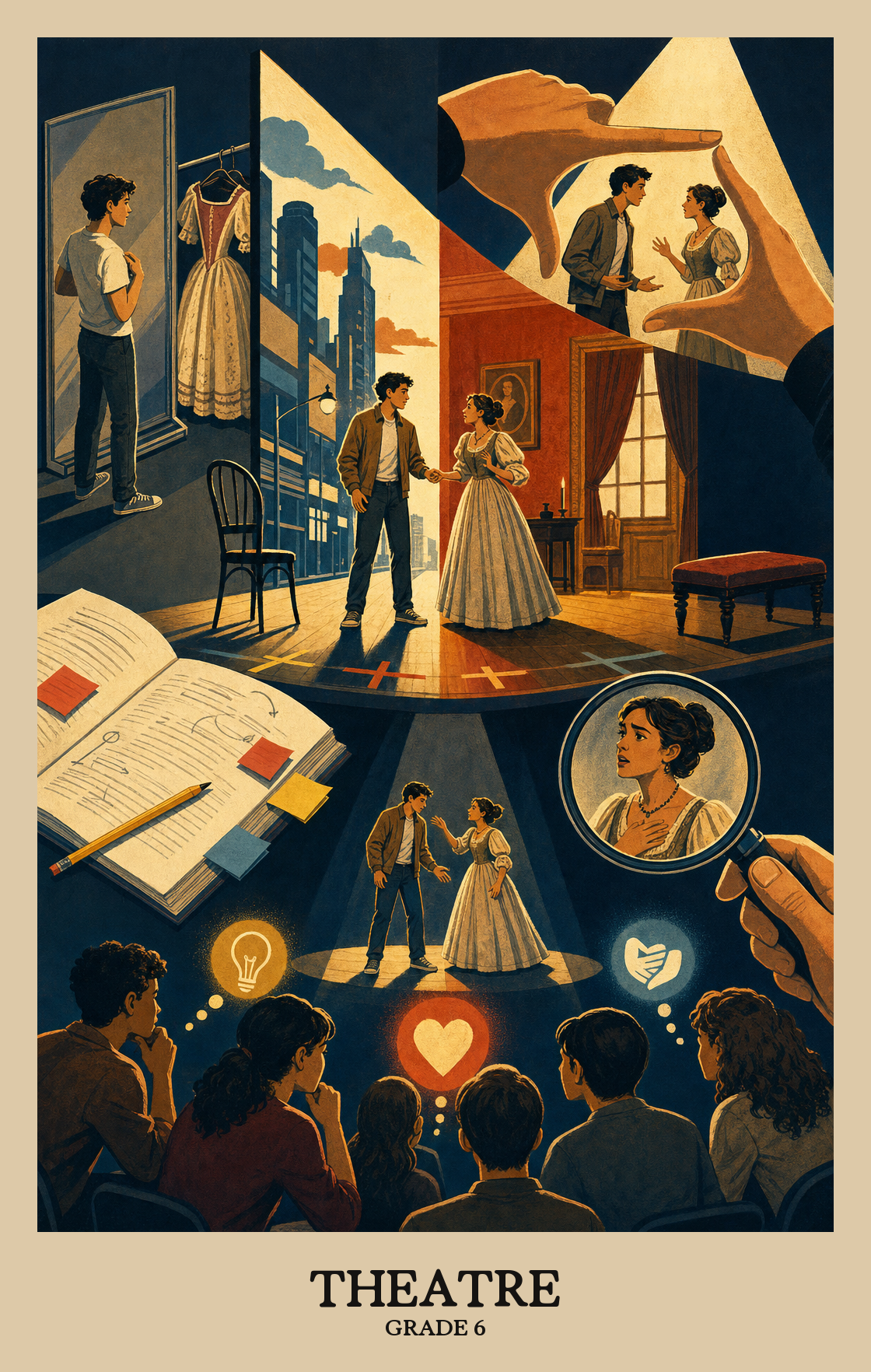
Students start the year by coming up with story ideas, characters, and scenes. They pull from their own lives and from books or events around them to find something worth acting out.
Students develop their ideas into scenes with a clear beginning, middle, and end. They try out choices, get feedback from classmates, and rework parts that are not landing yet.
Students practice voice, movement, and timing to bring a scene to life. They pick which version of a moment to perform and figure out how to make the meaning clear to an audience.
Students watch performances and talk about what worked and why. They learn to back up an opinion with specific moments from the show instead of just saying they liked it.
Students look at plays and performance traditions from different places and time periods. They notice how a story changes meaning depending on who is telling it and when.
Students connect something from their own life to a character, scene, or story they're creating in theatre class. That personal connection shapes the choices they make onstage.
Students connect a play or performance to the time and place it came from. Understanding that context helps them make sense of why characters act the way they do and what the work meant to its original audience.
| Standard | Definition | Code |
|---|---|---|
| Synthesize and relate knowledge and personal experiences to make art | Students connect something from their own life to a character, scene, or story they're creating in theatre class. That personal connection shapes the choices they make onstage. | TH:Cn10.6 |
| Relate artistic ideas and works with societal, cultural | Students connect a play or performance to the time and place it came from. Understanding that context helps them make sense of why characters act the way they do and what the work meant to its original audience. | TH:Cn11.6 |
Students brainstorm and develop original ideas for a theatre piece, deciding on characters, situations, and story direction before any rehearsal begins.
Students take their theatre ideas and shape them into a scene, choosing what characters say, how they move, and what the story needs to make the moment work.
Students revise a scene or script based on feedback, making specific changes until the work is ready to perform or share.
| Standard | Definition | Code |
|---|---|---|
| Generate and conceptualize artistic ideas and work | Students brainstorm and develop original ideas for a theatre piece, deciding on characters, situations, and story direction before any rehearsal begins. | TH:Cr1.6 |
| Organize and develop artistic ideas and work | Students take their theatre ideas and shape them into a scene, choosing what characters say, how they move, and what the story needs to make the moment work. | TH:Cr2.6 |
| Refine and complete artistic work | Students revise a scene or script based on feedback, making specific changes until the work is ready to perform or share. | TH:Cr3.6 |
Students choose a scene or monologue to perform and explain why it fits the story and their own strengths as a performer.
Students rehearse and improve a scene or performance before showing it to an audience. That means taking notes from a director or classmate, making changes, and practicing until the work is ready to share.
Students perform a scene or monologue with a clear purpose, making choices about voice, movement, and character so the audience understands what the piece is about.
| Standard | Definition | Code |
|---|---|---|
| Analyze, interpret, and select artistic work for presentation | Students choose a scene or monologue to perform and explain why it fits the story and their own strengths as a performer. | TH:Pr4.6 |
| Develop and refine artistic techniques and work for presentation | Students rehearse and improve a scene or performance before showing it to an audience. That means taking notes from a director or classmate, making changes, and practicing until the work is ready to share. | TH:Pr5.6 |
| Convey meaning through the presentation of artistic work | Students perform a scene or monologue with a clear purpose, making choices about voice, movement, and character so the audience understands what the piece is about. | TH:Pr6.6 |
Students watch a scene or performance and explain what choices the actor or director made, such as movement, tone of voice, or setting, and why those choices shape how the audience feels.
Students explain what a scene or performance is really about, going beyond what happens on stage to describe the choices an actor or playwright made and why those choices matter.
Students look at a scene or performance and judge it against specific criteria, explaining what worked, what didn't, and why.
| Standard | Definition | Code |
|---|---|---|
| Perceive and analyze artistic work | Students watch a scene or performance and explain what choices the actor or director made, such as movement, tone of voice, or setting, and why those choices shape how the audience feels. | TH:Re7.6 |
| Interpret intent and meaning in artistic work | Students explain what a scene or performance is really about, going beyond what happens on stage to describe the choices an actor or playwright made and why those choices matter. | TH:Re8.6 |
| Apply criteria to evaluate artistic work | Students look at a scene or performance and judge it against specific criteria, explaining what worked, what didn't, and why. | TH:Re9.6 |
Students build short scenes from their own ideas, act in them, and talk about what worked. They also watch plays and stories from different times and places, then explain what the writer or actor was trying to say. Expect a mix of making, performing, and responding.
Start small. Read a picture book or a scene from a play out loud together and try different voices for each character. Five minutes of silly voices at the dinner table builds the same skills as a classroom warm-up, without any pressure to perform.
Most likely yes. Drama games teach focus, listening, and how to react in the moment, which are the same skills actors use on stage. Ask what choice they made as a character and why. That question gets at the real work.
Spend the first weeks on ensemble habits and short improvised scenes so students get comfortable making choices in front of each other. Move into scripted scene work in the middle of the year, then end with a polished piece students rehearse, revise, and present.
Giving useful feedback to a peer is the hardest one. Students often say a scene was good or bad without pointing to a specific moment. Build a simple feedback frame early and keep using it, so by spring students can name what an actor did and suggest a clear next step.
Ask what the play was about and what was different about the world the characters lived in. A short conversation about why people back then might have cared about the story helps more than research. Watching a short clip of the play together also counts.
A finished piece has a clear beginning, middle, and end, characters the audience can follow, and choices the actors can explain. It does not need a set or costumes. A two-minute scene that students wrote, rehearsed, and revised is plenty at this age.
By June, students should be able to build a short scene from a prompt, rehearse it with a partner, and revise it after feedback. They should also be able to watch a scene and say what the actor or writer was going for, using specific moments rather than a thumbs up or down.