Skills and team play warm-up
Students return to sports and games and sharpen the basics. They practice running, throwing, catching, and dodging in drills and small-sided games before moving into full team play.
This is the year gym class starts to feel like training for a real sport or workout. Students sharpen the skills they already have and learn how to plan their own activity for fitness, not just play games. They work on teamwork, fair play, and handling pressure with classmates. By spring, students can explain why they picked an activity, stick with it, and see how it keeps their body and mind healthy.
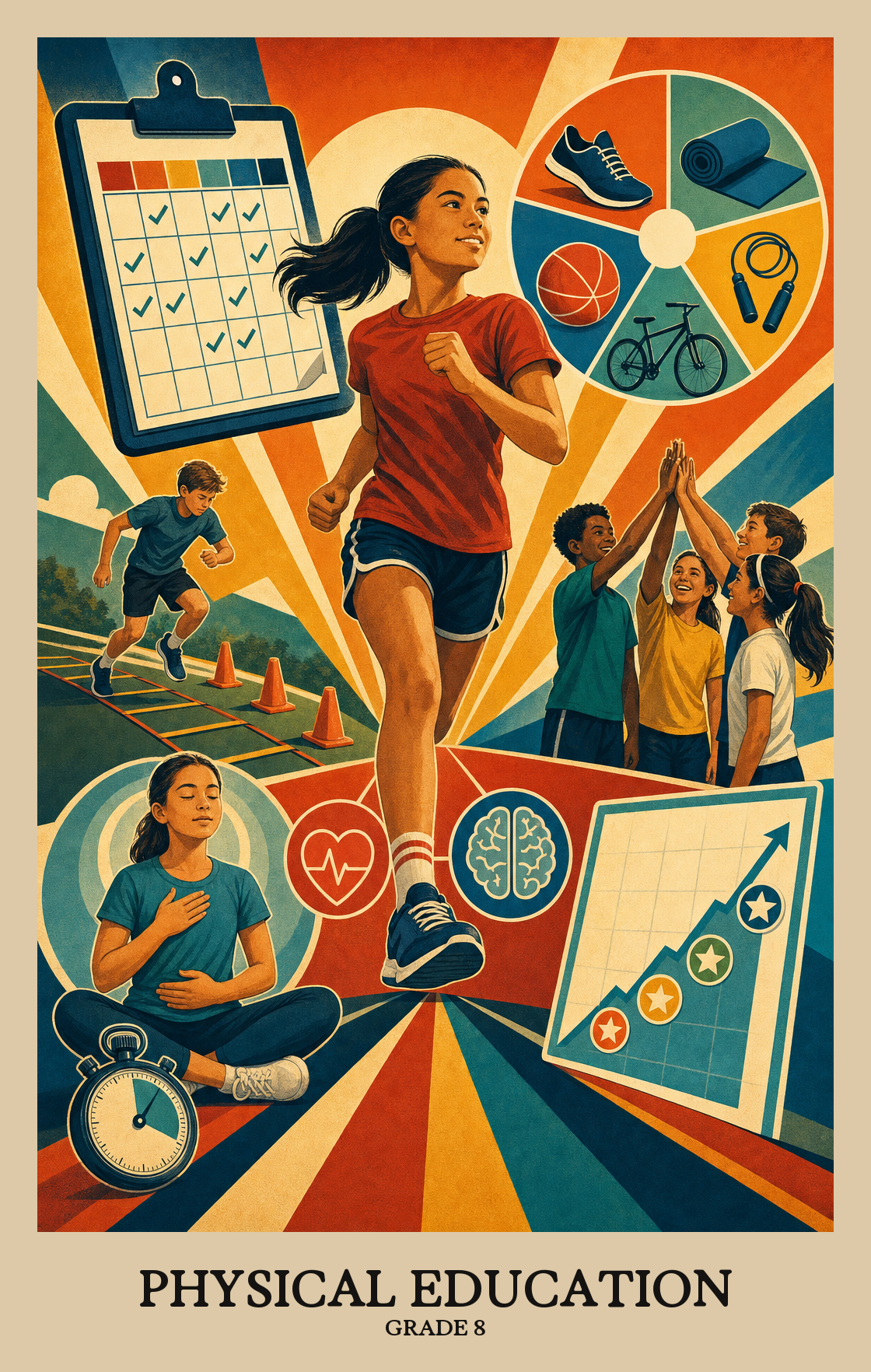
Students return to sports and games and sharpen the basics. They practice running, throwing, catching, and dodging in drills and small-sided games before moving into full team play.
Students learn what makes a workout build strength, stamina, or flexibility. They try different kinds of exercise and start to notice how their heart rate, breathing, and muscles respond.
Students practice the social side of sports. They take turns leading, give honest feedback, settle disagreements without a referee, and include classmates of different skill levels in the game.
Students set their own goals and choose activities they actually enjoy, from biking to weight training to dance. The aim is to leave middle school with a clear sense of how to stay active on their own.
Students practice moving, balancing, and handling objects like balls and equipment with more control and consistency. These skills form the foundation for sports, fitness activities, and staying active through adulthood.
Students use what they know about how the body moves and stays fit to make smarter choices during physical activity. That means adjusting effort, form, or pacing based on the goal of the workout or game.
Students practice working with others during physical activities: taking turns, giving encouragement, and handling wins or losses without making it a problem. The focus is on how students treat each other, not just how well they move.
Students set personal fitness goals, recognize what regular movement does for their body and mood, and make their own choices about staying active. The focus is building habits that hold up long after gym class ends.
| Standard | Definition | Code |
|---|---|---|
| Develop a variety of motor skills, including locomotor, non-locomotor | Students practice moving, balancing, and handling objects like balls and equipment with more control and consistency. These skills form the foundation for sports, fitness activities, and staying active through adulthood. | CT-PE.1.8 |
| Apply knowledge related to movement, performance | Students use what they know about how the body moves and stays fit to make smarter choices during physical activity. That means adjusting effort, form, or pacing based on the goal of the workout or game. | CT-PE.2.8 |
| Develop social skills through movement, including respect for self and others… | Students practice working with others during physical activities: taking turns, giving encouragement, and handling wins or losses without making it a problem. The focus is on how students treat each other, not just how well they move. | CT-PE.3.8 |
| Develop personal skills, identify personal benefits of movement | Students set personal fitness goals, recognize what regular movement does for their body and mood, and make their own choices about staying active. The focus is building habits that hold up long after gym class ends. | CT-PE.4.8 |
Students play team sports, do individual fitness activities, and try things like dance, yoga, or strength work. The focus shifts from learning basic movements to using them well in games and workouts. Students also start thinking about how exercise fits into their own life outside school.
Aim for 60 minutes of movement most days. Walks after dinner, bike rides, shooting hoops in the driveway, or a quick workout video all count. The goal at this age is helping students find a few activities they actually enjoy and want to keep doing.
Students should be able to play several sports with reasonable skill, explain how exercise affects the heart and muscles, and design a basic fitness plan for themselves. They should also work well in groups, handle losing, and show up ready to participate.
That is common at this age and it is fine. Encourage activities like running, biking, hiking, swimming, dance, martial arts, or weight training. The point is regular movement, not a particular sport. Trying a few options usually helps students land on something that sticks.
Most teachers rotate through team sports, individual activities, and fitness units across the year, with fitness testing built in twice. Save cooperative or higher-risk activities for later in the year once classroom culture is set. Build personal goal-setting into every unit, not just the fitness one.
Sportsmanship under pressure, communication during fast-moving games, and pacing during sustained activity are the common gaps. Students often have the physical skills but struggle to apply them when a game gets competitive or when they get tired. Build in short reflection moments after activity.
Grades usually reflect participation, effort, skill growth, and behavior more than raw athletic talent. A student who shows up, tries hard, works well with classmates, and improves over time will do well, even if they are not the strongest athlete in the class.
Frame fitness testing as personal data, not a class ranking. Have students record their own scores in the fall and spring and set goals based on their starting point. Keep results private and tie any conversation to personal progress rather than peer comparison.
A student is ready if they can join a new activity without much hesitation, keep up during 20 to 30 minutes of steady movement, and handle group situations without drama. Being willing to try unfamiliar activities matters more than being the best at any one of them.