Movement skills and warm-ups
Students start the year sharpening basic movement: running, jumping, dodging, and using equipment like rackets, balls, and bats. Parents may hear about skill drills and fitness check-ins early on.
This is the year physical education shifts from learning skills to building habits students can keep for life. Students refine the movement skills they already have and start choosing activities they actually enjoy. They learn how fitness works, how to play well with others, and how to set goals for their own health. By the end of the year, students can lead themselves through a workout or game without being told what to do.
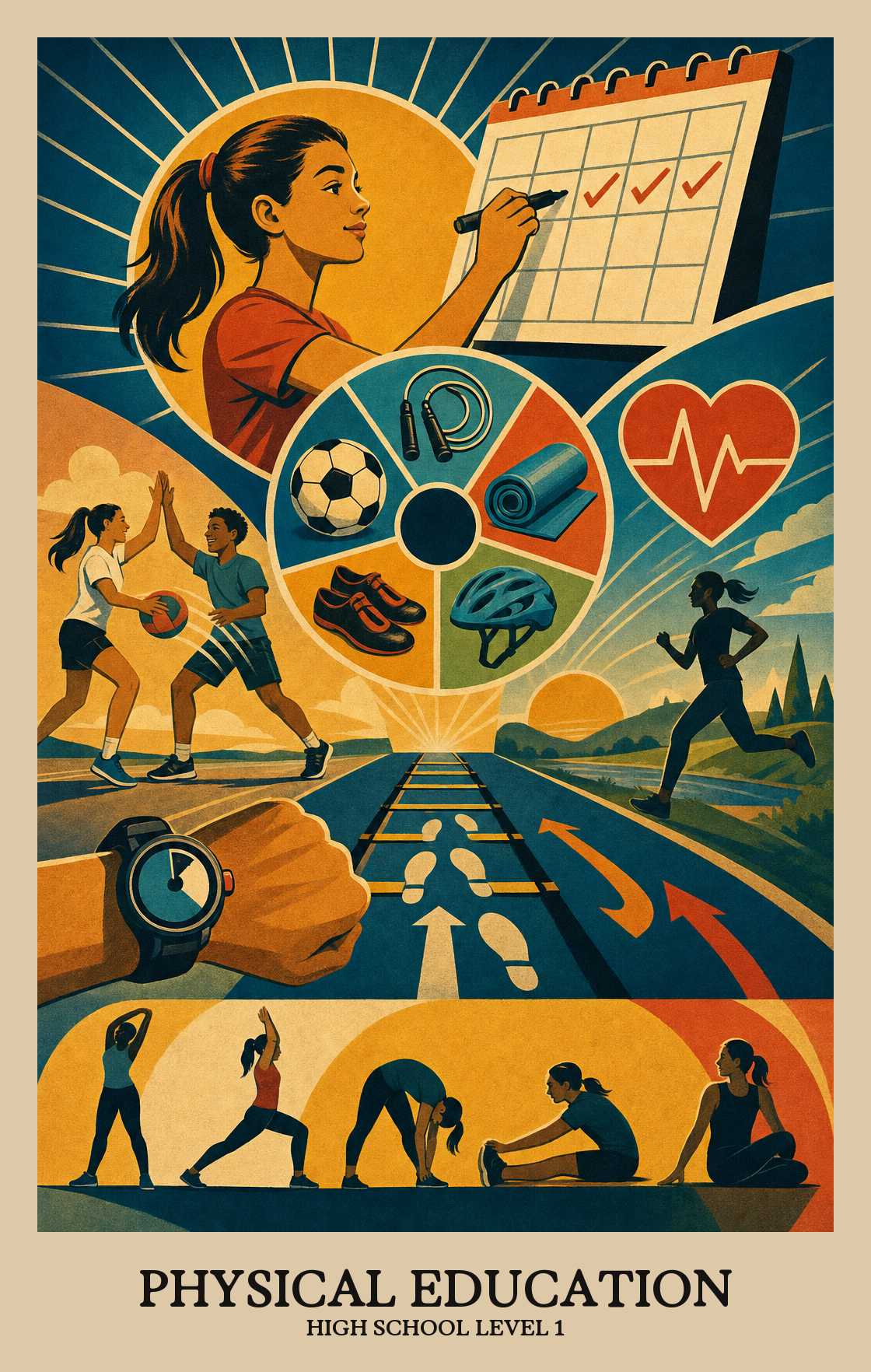
Students start the year sharpening basic movement: running, jumping, dodging, and using equipment like rackets, balls, and bats. Parents may hear about skill drills and fitness check-ins early on.
Students learn how the body responds to exercise and set personal fitness goals around strength, endurance, and flexibility. Expect talk about heart rate, warm-ups, and tracking progress.
Students apply their skills in team and individual games. The focus shifts to working with classmates, following rules, handling wins and losses, and communicating on the court or field.
Students wrap up the year by connecting class activities to choices they can make outside of school. They explore activities they enjoy and build habits that keep them active beyond gym class.
Students practice moving their bodies in different ways, from throwing and catching to balancing and changing direction. Building a range of these skills makes it easier to stay active and join in sports or fitness activities for life.
Students use what they know about how the body moves and stays fit to make better choices during exercise and physical activity.
Students practice working with others during physical activities: listening, taking turns, and adjusting their behavior so the group can succeed together.
Students start building habits around staying active, not just for class but for life. They reflect on what movement does for them personally and make choices about physical activity that they can keep up long after graduation.
| Standard | Definition | Code |
|---|---|---|
| Develop a variety of motor skills, including locomotor, non-locomotor High School Level 1 | Students practice moving their bodies in different ways, from throwing and catching to balancing and changing direction. Building a range of these skills makes it easier to stay active and join in sports or fitness activities for life. | FL-PE.1.hs-level-1 |
| Apply knowledge related to movement, performance High School Level 1 | Students use what they know about how the body moves and stays fit to make better choices during exercise and physical activity. | FL-PE.2.hs-level-1 |
| Develop social skills through movement, including respect for self and others… High School Level 1 | Students practice working with others during physical activities: listening, taking turns, and adjusting their behavior so the group can succeed together. | FL-PE.3.hs-level-1 |
| Develop personal skills, identify personal benefits of movement High School Level 1 | Students start building habits around staying active, not just for class but for life. They reflect on what movement does for them personally and make choices about physical activity that they can keep up long after graduation. | FL-PE.4.hs-level-1 |
Students build skills they can use for life: running, throwing, catching, balancing, and moving with control in games and activities. They also learn how fitness works, how to work well with others, and how to keep moving outside of class.
Aim for about 30 minutes of movement most days. A walk after dinner, shooting hoops in the driveway, biking, or playing catch all count. The goal is steady habit, not a hard workout.
Level 1 PE is not just team sports. Students try yoga, walking, weight training, dance, and individual fitness activities. Helping students find one type of movement they enjoy matters more than being the best at any sport.
Start with movement skills and fitness basics so students have a baseline. Build into team and individual activities that apply those skills, then close the year with personal fitness planning so students can keep going on their own.
Students can perform basic skills in real game and fitness settings, explain why warm-ups and pacing matter, and design a simple fitness plan they could follow on their own. They also show respect, fair play, and effort without constant prompting.
Grades reflect effort, skill growth, and knowledge, not raw athletic ability. A student who shows up, participates, follows safety rules, and improves over time will do well even if they are not the fastest or strongest in class.
Fitness concepts like target heart rate, proper form for lifting, and pacing tend to need a second pass. Cooperation and conflict resolution during competitive play often need reteaching too, especially early in the year.
Students should be able to take part in a full class without getting winded right away, know how to warm up safely, and explain what activities they enjoy and why. Talking about fitness goals at home is a good sign the habit is forming.