Movement skills and self-assessment
Students start the year sharpening basic movement skills like running, jumping, throwing, and catching across different activities. They learn how to spot their own strengths and what needs more practice.
This is the year physical education shifts from learning skills to building habits that last past high school. Students practice movement in sports, fitness routines, and team games, then connect what they do to how their bodies feel and perform. They work on cooperation, fair play, and personal goals like tracking their own activity. By spring, students can plan a workout or activity they would actually keep doing on their own.
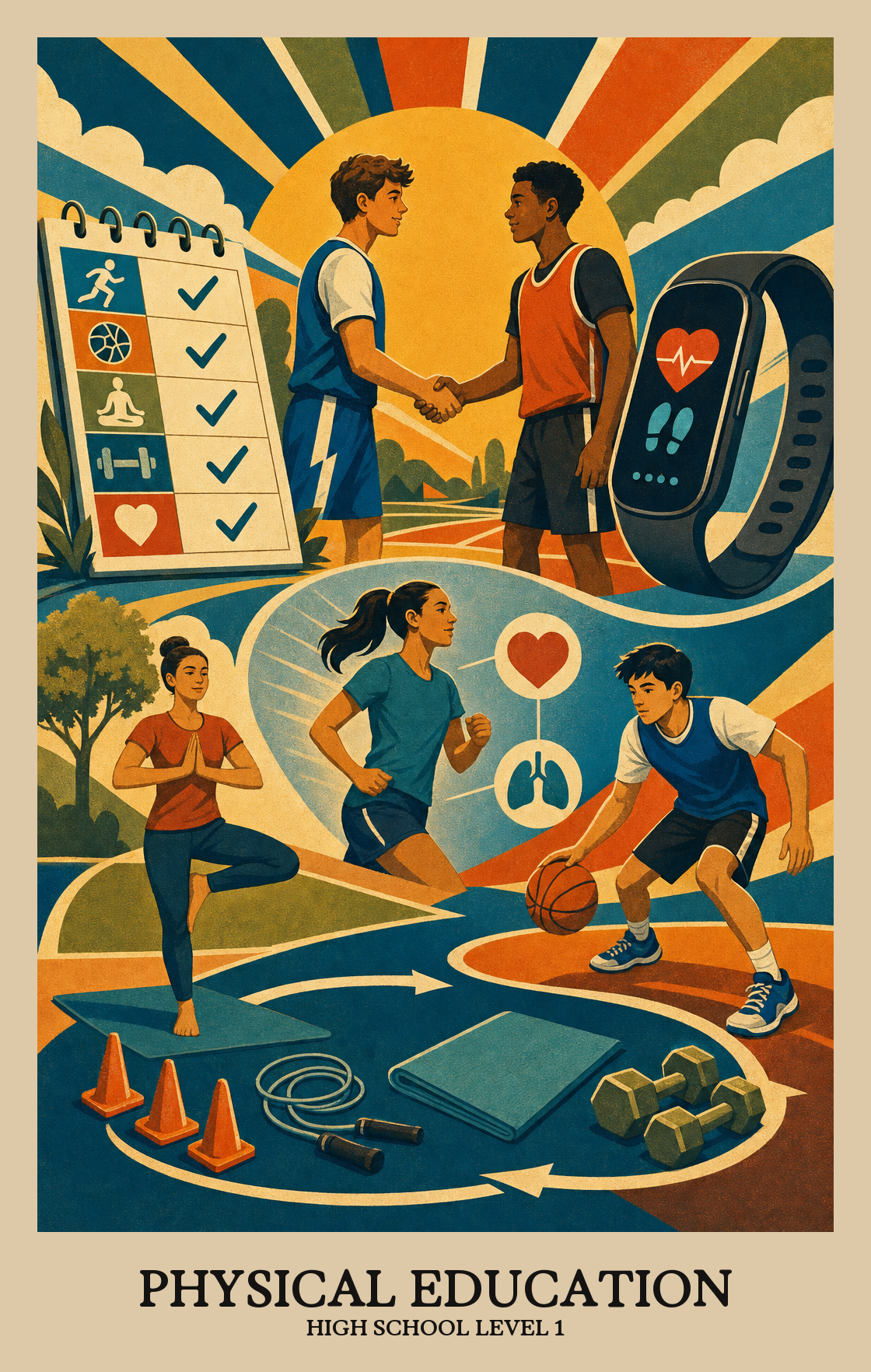
Students start the year sharpening basic movement skills like running, jumping, throwing, and catching across different activities. They learn how to spot their own strengths and what needs more practice.
Students learn what makes a workout build strength, endurance, or flexibility. They use that knowledge to set personal fitness goals and track their own progress over weeks.
Students practice working with classmates in games and group activities. They focus on communication, respect, and handling wins and losses without drama.
Students try a range of activities, from team sports to individual fitness, and figure out which ones they actually enjoy. The goal is finding something they will keep doing after the class ends.
Students practice moving, balancing, and handling objects like balls or rackets. These skills form the foundation for sports and physical activities students can keep doing throughout their lives.
Students use what they know about how the body moves and stays fit to make better choices during physical activity, like adjusting effort, form, or pacing to perform well and protect their health.
Students practice working with others during physical activities: listening, taking turns, and handling wins and losses with respect. The focus is on how students treat teammates and opponents, not just how well they move.
Students identify what they personally enjoy or gain from being active, then start building the habit of regular exercise they can keep up for life.
| Standard | Definition | Code |
|---|---|---|
| Develop a variety of motor skills, including locomotor, non-locomotor High School Level 1 | Students practice moving, balancing, and handling objects like balls or rackets. These skills form the foundation for sports and physical activities students can keep doing throughout their lives. | DE-PE.1.hs-level-1 |
| Apply knowledge related to movement, performance High School Level 1 | Students use what they know about how the body moves and stays fit to make better choices during physical activity, like adjusting effort, form, or pacing to perform well and protect their health. | DE-PE.2.hs-level-1 |
| Develop social skills through movement, including respect for self and others… High School Level 1 | Students practice working with others during physical activities: listening, taking turns, and handling wins and losses with respect. The focus is on how students treat teammates and opponents, not just how well they move. | DE-PE.3.hs-level-1 |
| Develop personal skills, identify personal benefits of movement High School Level 1 | Students identify what they personally enjoy or gain from being active, then start building the habit of regular exercise they can keep up for life. | DE-PE.4.hs-level-1 |
Students build skills they can use for life, not just for a single sport. They practice movement in games and fitness activities, learn how exercise affects the body, and work on getting along with teammates. The goal is to leave high school with habits that keep students active well past graduation.
Pick something the family can do together a few times a week, like a walk after dinner, shooting baskets in the driveway, or a bike ride on the weekend. Twenty to thirty minutes is plenty. The point is to make movement feel normal, not like a chore.
Focus on activities where skill matters less, such as hiking, swimming, dancing, or lifting weights. Students at this level are supposed to find forms of movement that fit them, not master every sport. Helping students find one activity they enjoy is worth more than pushing a team sport.
Grading practices vary by school, but most teachers grade effort, participation, and growth more than raw fitness scores. A student who shows up, tries, and improves over time will usually do well. Ask the teacher how the class is graded if it is not clear.
A common approach is to rotate through fitness, team activities, individual and lifetime activities, and a cooperative or outdoor unit. Build a short fitness focus into every unit so students keep working on cardio, strength, and flexibility year round. Save lifetime activities like yoga, walking, or weight training for later in the year once students have built some base fitness.
Pacing during sustained activity and basic fitness vocabulary like heart rate zones, sets, and reps. Many students also need help with cooperation in mixed-skill groups, since some have years of club sports and others have very little background. Plan short, direct lessons on these before jumping into game play.
Offer choices within each unit so students can pick a role or an activity that feels manageable. Small group stations work better than full-class games for students who feel watched. Track personal progress against a student's own starting point rather than against classmates.
By the end of the year, a student should be able to take part in a range of activities with reasonable skill, explain how a workout builds fitness, and set a simple personal goal. Look for students who can warm up on their own and work with different partners without much prompting. That mix of skill, knowledge, and behavior is the marker of readiness.