Moving with control
Students sharpen the basic ways their bodies move: running, jumping, skipping, hopping, and changing direction without falling or bumping into others. Expect steadier balance and better body awareness during games at home.
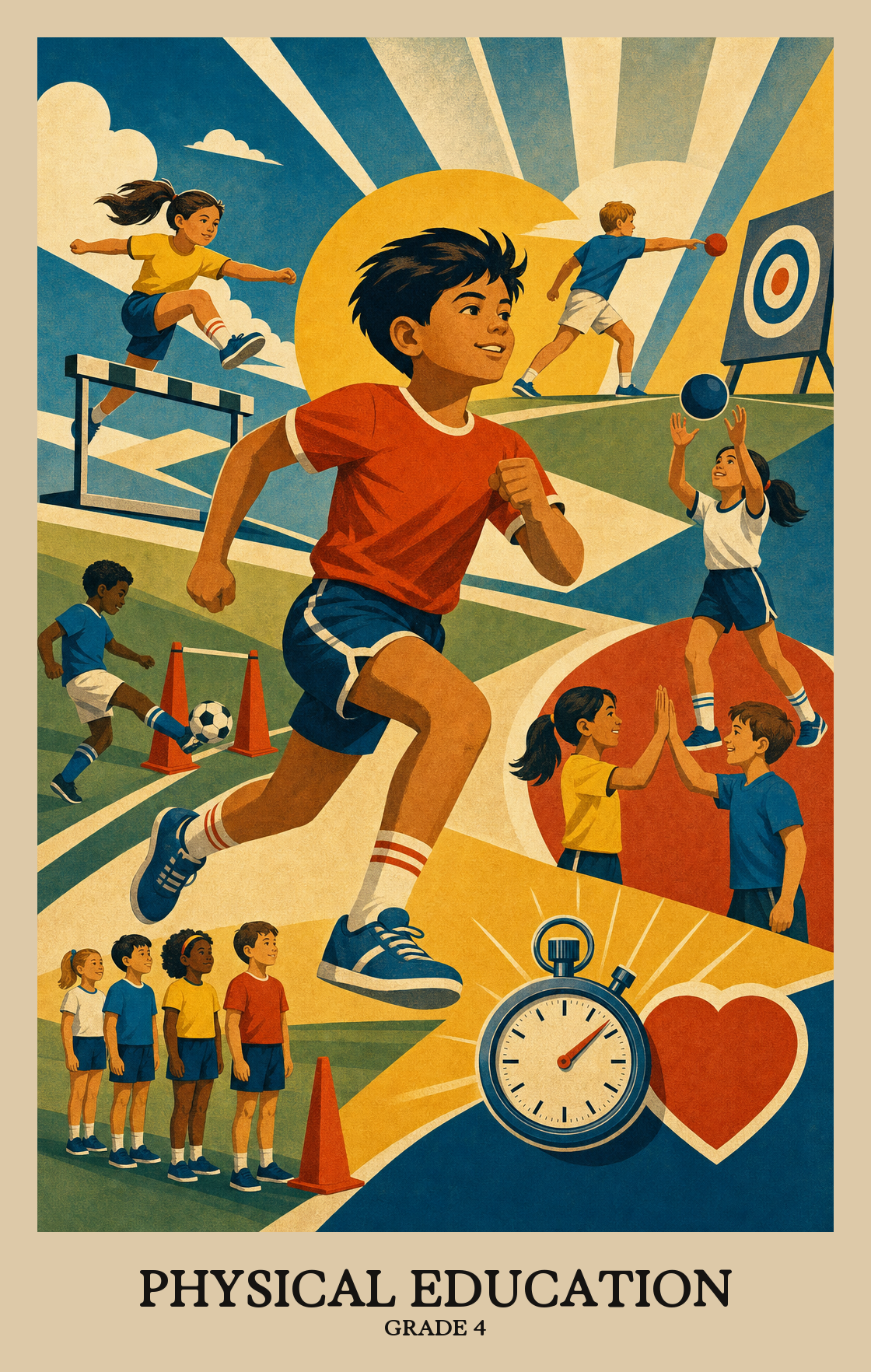
This is the year movement gets sharper and more intentional. Students refine running, jumping, throwing, catching, and kicking so they can use them in real games and activities. They start connecting effort and practice to fitness, and they learn to cooperate, take turns, and play fair with classmates. By spring, students can follow the rules of a group game, work with a partner, and explain why staying active matters.
Students sharpen the basic ways their bodies move: running, jumping, skipping, hopping, and changing direction without falling or bumping into others. Expect steadier balance and better body awareness during games at home.
Students practice sending and receiving a ball with hands, feet, and equipment like paddles or sticks. Aim, timing, and follow-through start to look more like a real player and less like a guess.
Students move into small-sided games where rules, positions, and fair play matter. They learn to pass, share space, encourage teammates, and handle winning and losing without it ruining the day.
Students learn what makes the heart and muscles stronger and try out warm-ups, stretches, and endurance activities. They start to notice how their body feels after exercise and why daily movement matters.
Students reflect on which activities they enjoy and set small personal goals for staying active outside of class. The goal is finding movement they will actually keep doing on their own.
Students practice moving in different ways, like jumping, balancing, and throwing or catching a ball. These movement skills build the foundation for staying active in sports and everyday life.
Students use what they know about how the body moves and stays healthy to make better choices during games, exercises, and other physical activities.
Students practice working with others during games and movement activities. They take turns, follow group rules, communicate with teammates, and show respect for themselves and the people they play with.
Students practice physical skills, notice how movement makes them feel, and start building a habit of staying active. The goal is choosing to keep moving, not just during PE class.
| Standard | Definition | Code |
|---|---|---|
| Develop a variety of motor skills, including locomotor, non-locomotor | Students practice moving in different ways, like jumping, balancing, and throwing or catching a ball. These movement skills build the foundation for staying active in sports and everyday life. | DE-PE.1.4 |
| Apply knowledge related to movement, performance | Students use what they know about how the body moves and stays healthy to make better choices during games, exercises, and other physical activities. | DE-PE.2.4 |
| Develop social skills through movement, including respect for self and others… | Students practice working with others during games and movement activities. They take turns, follow group rules, communicate with teammates, and show respect for themselves and the people they play with. | DE-PE.3.4 |
| Develop personal skills, identify personal benefits of movement | Students practice physical skills, notice how movement makes them feel, and start building a habit of staying active. The goal is choosing to keep moving, not just during PE class. | DE-PE.4.4 |
Students build the running, jumping, throwing, catching, kicking, and balancing skills they started in earlier grades. They also start to understand why their heart beats faster during exercise and how to work well with a partner or team. Expect a mix of games, fitness activities, and skill practice.
Aim for about 60 minutes of active play most days. That can be a walk, bike ride, backyard catch, jump rope, or dance break. Short bursts add up, so a few 10-minute games of tag count.
At this age, skills still vary a lot, and confidence matters more than talent. Practice one thing at a time, like catching a ball or dribbling, and keep it short and playful. Praise effort and small improvements rather than wins.
Start with locomotor and basic manipulative skills to check where students are, then build into small-sided games that combine skills. Layer in fitness concepts and teamwork as the year goes on. Save more complex strategy games for spring once skills are steadier.
Catching with hands only, striking with a paddle or bat, and pacing during longer runs tend to need the most practice. Cooperative behavior during competitive games is also a frequent reteach. Short skill stations work better than long lectures.
Use stations and modified games so students can work at different distances, speeds, or equipment sizes. Offer two or three challenge levels for each task and let students pick. This keeps stronger students engaged without leaving others behind.
By the end of the year, students should move confidently in games, follow rules, and play fairly with classmates. They should know basic fitness ideas, like why warming up matters, and be able to name an activity they enjoy. Look for steady effort more than perfect skills.
No. A ball, a jump rope, and some open space cover most of what is needed. Outside sports teams are nice but not required, and free play at the park builds many of the same skills.