Moving safely and together
Students learn how to move around the gym without bumping into others. They practice listening for signals, sharing space, and working with a partner during simple games.
This is the year movement starts to feel like a skill, not just play. Students practice running, jumping, hopping, and skipping with more control, and they learn to toss, catch, and kick a ball on purpose. Along the way, they take turns, follow simple rules, and start to notice how their bodies feel after being active. By spring, students can move safely in a shared space and play a simple group game without losing track of the rules.
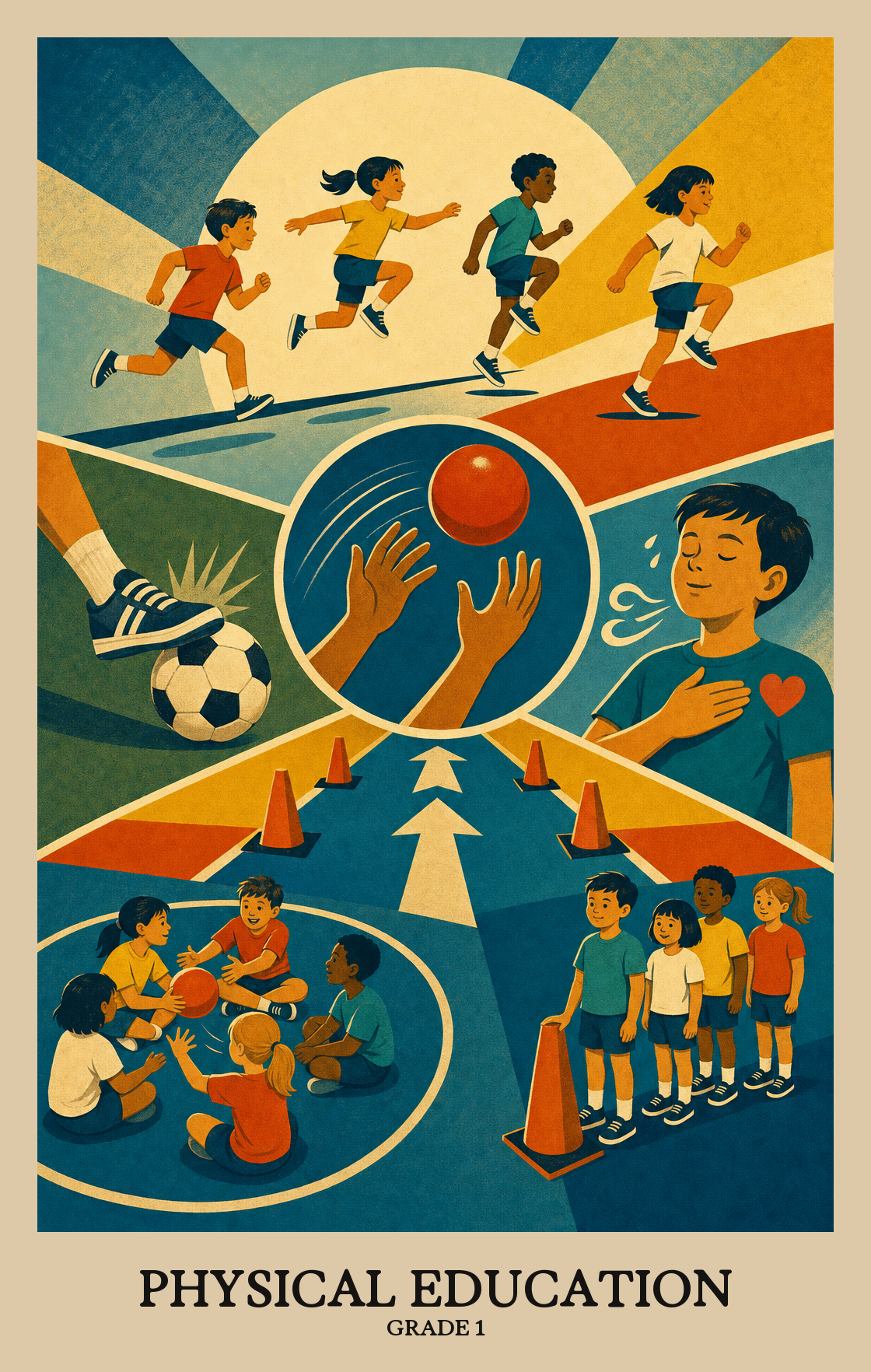
Students learn how to move around the gym without bumping into others. They practice listening for signals, sharing space, and working with a partner during simple games.
Students practice the basic ways bodies travel. They run, hop, skip, and gallop in different directions and at different speeds, building coordination and balance.
Students start handling balls and beanbags. They practice tossing underhand, catching with two hands, and kicking a ball toward a target.
Students notice how their bodies feel after activity, like a faster heartbeat or warmer skin. They talk about why moving every day matters and try activities they can do at home.
Students practice moving their bodies in different ways: running, jumping, balancing, throwing, and catching. Building these skills early helps students stay active as they grow.
Students learn basic ideas about how the body moves and stays healthy, then put those ideas to work during physical activities. Think of it as connecting what students know about exercise to what they do in gym class.
Students practice working with classmates during movement activities, taking turns, listening, and treating others fairly. These habits build the teamwork skills students use in gym class and beyond.
Students learn why moving their body feels good and start building the habit of staying active. They practice choosing activities they enjoy so that being active becomes a normal part of their day.
| Standard | Definition | Code |
|---|---|---|
| Develop a variety of motor skills, including locomotor, non-locomotor | Students practice moving their bodies in different ways: running, jumping, balancing, throwing, and catching. Building these skills early helps students stay active as they grow. | DE-PE.1.1 |
| Apply knowledge related to movement, performance | Students learn basic ideas about how the body moves and stays healthy, then put those ideas to work during physical activities. Think of it as connecting what students know about exercise to what they do in gym class. | DE-PE.2.1 |
| Develop social skills through movement, including respect for self and others… | Students practice working with classmates during movement activities, taking turns, listening, and treating others fairly. These habits build the teamwork skills students use in gym class and beyond. | DE-PE.3.1 |
| Develop personal skills, identify personal benefits of movement | Students learn why moving their body feels good and start building the habit of staying active. They practice choosing activities they enjoy so that being active becomes a normal part of their day. | DE-PE.4.1 |
Students should be able to run, skip, hop, and jump with control, and toss, catch, and kick a ball without falling apart. They should also follow simple game rules and play next to other students without melting down when they lose.
Set aside ten minutes a day for active play in the yard, a park, or a hallway. Roll a ball back and forth, play tag, hop on one foot, or balance on a curb. The goal is movement and laughter, not drills.
At this age, skills come from practice, not talent. Pick one thing they want to get better at, like catching a soft ball or skipping, and do it together for a few minutes a few times a week. Praise effort, not outcome.
Start with locomotor skills like walking, running, hopping, and skipping in the fall when space and energy are highest. Move to non-locomotor skills like balancing and twisting, then layer in throwing, catching, kicking, and striking once students can control their bodies in space.
Skipping, galloping, and catching with hands instead of the chest are the common sticking points. Plan to revisit each one every few weeks rather than teach it once and move on. Short, frequent practice sticks better than long blocks.
Build cooperative games before competitive ones, and teach a simple routine for resetting after a tough moment. Pair shy students with a steady partner and give clear, small choices so they feel some control over the activity.
By June, students should move safely in a shared space, perform basic locomotor skills on cue, and use a ball with their hands and feet in simple ways. They should also share equipment, take turns, and follow two-step directions during a game.