Movement skills and fitness basics
Students sharpen the core movement skills they will use all year. They run, throw, catch, dodge, and balance in drills and games, and learn what a real warm-up and cool-down look like.
This is the year gym class starts pointing toward life after high school. Students sharpen the movement skills they have been building since elementary school and learn to apply fitness concepts like heart rate, strength, and endurance to real workouts. They also practice working with classmates of all skill levels, including how to communicate during a game and handle losing well. By spring, students can design a simple fitness routine they would actually keep doing on their own.
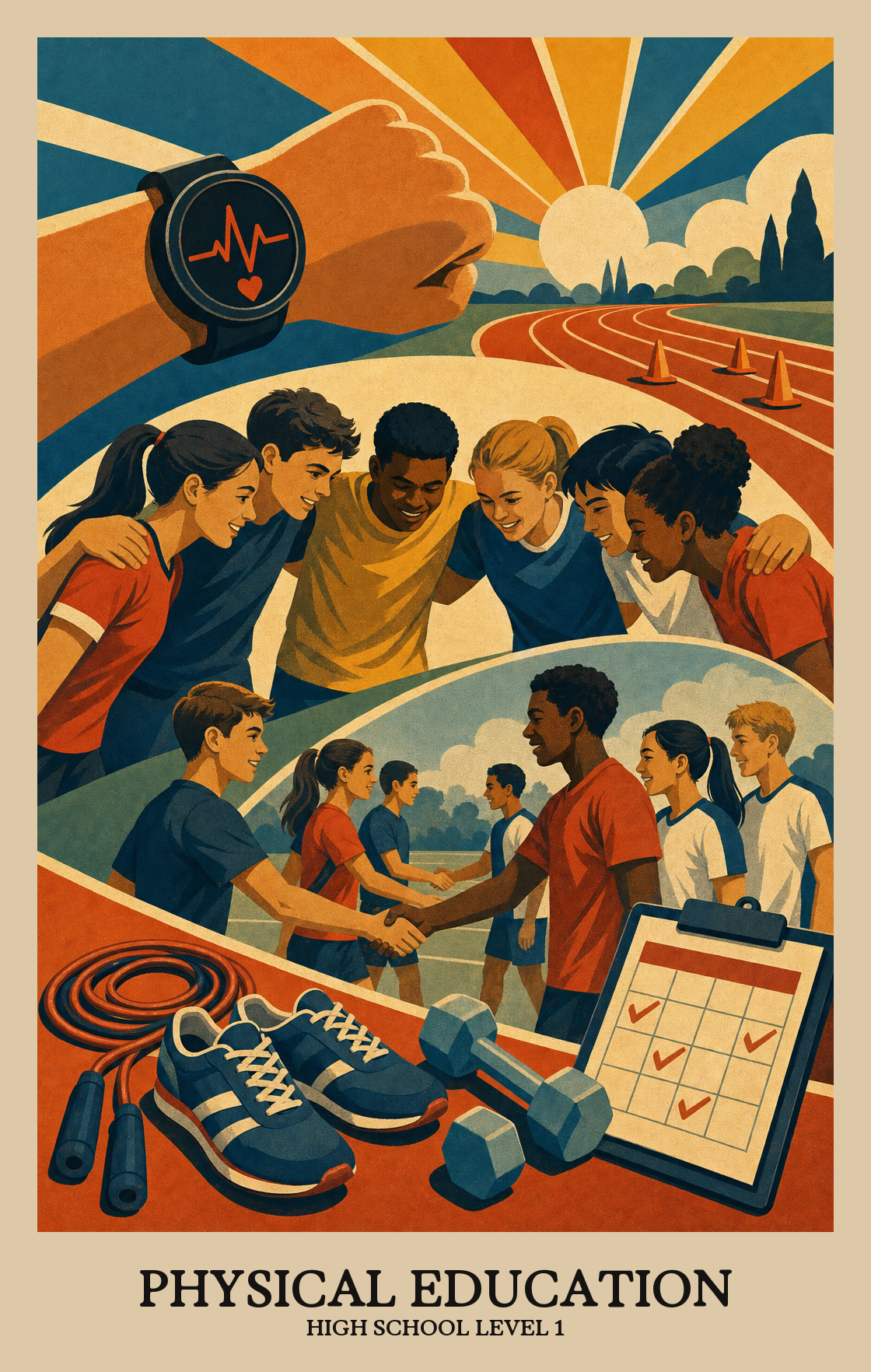
Students sharpen the core movement skills they will use all year. They run, throw, catch, dodge, and balance in drills and games, and learn what a real warm-up and cool-down look like.
Students play team games like basketball, soccer, or volleyball. The focus shifts to working with classmates, passing on time, communicating during play, and handling wins and losses with respect.
Students learn how the body responds to exercise and what builds strength, endurance, and flexibility. They check their own fitness, set a personal goal, and track progress over several weeks.
Students try activities they could keep doing as adults, such as hiking, yoga, weight training, or pickleball. They reflect on what they enjoy and plan how to stay active outside of class.
Students practice moving their body in different ways, from running and jumping to throwing and catching. These skills build the physical foundation for sports, fitness activities, and staying active for life.
Students connect what they know about how the body moves and stays fit to how they actually perform in games, workouts, and other physical activities.
Students practice working with others during physical activities, listening, taking turns, and treating teammates respectfully. The focus is on how students carry themselves and interact with others, not just how well they move.
Students learn to recognize what physical activity does for them personally and build the habit of moving regularly. The goal is staying active long after graduation, not just passing a class.
| Standard | Definition | Code |
|---|---|---|
| Develop a variety of motor skills, including locomotor, non-locomotor High School Level 1 | Students practice moving their body in different ways, from running and jumping to throwing and catching. These skills build the physical foundation for sports, fitness activities, and staying active for life. | CT-PE.1.hs-level-1 |
| Apply knowledge related to movement, performance High School Level 1 | Students connect what they know about how the body moves and stays fit to how they actually perform in games, workouts, and other physical activities. | CT-PE.2.hs-level-1 |
| Develop social skills through movement, including respect for self and others… High School Level 1 | Students practice working with others during physical activities, listening, taking turns, and treating teammates respectfully. The focus is on how students carry themselves and interact with others, not just how well they move. | CT-PE.3.hs-level-1 |
| Develop personal skills, identify personal benefits of movement High School Level 1 | Students learn to recognize what physical activity does for them personally and build the habit of moving regularly. The goal is staying active long after graduation, not just passing a class. | CT-PE.4.hs-level-1 |
Students build the running, throwing, catching, and balance skills used in sports and everyday life. They also learn how exercise affects the body and how to work well with teammates. The goal is habits students can keep using after school ends.
Aim for about an hour of movement most days. Walks after dinner, bike rides, pickup basketball, or yard work all count. Asking students to teach a skill they practiced in class is a quick way to reinforce it.
This level is about personal progress, not competing with the best athlete in the room. Students pick activities they enjoy and track their own fitness over time. Effort, teamwork, and showing up matter more than winning a game.
A common pattern is fitness baseline testing early, then a rotation through team sports, individual or lifetime activities, and a fitness planning unit. Revisit fitness checks midyear and at the end so students can see growth in strength, endurance, and flexibility.
Pacing during cardio work and proper form on strength exercises tend to slip first. Many students also need repeated coaching on giving teammates useful feedback instead of either silence or sarcasm. Build short skill refreshers into warm-ups all year.
Ask what part feels hardest: changing clothes, a specific activity, or social pressure. Then practice one small piece at home, like shooting baskets in the driveway or doing a short stretch routine together. Confidence usually comes from reps in a low-pressure setting.
Students should be able to explain the difference between cardio, strength, and flexibility work, and design a simple weekly plan for themselves. They should also know how to take a pulse, warm up safely, and set a realistic personal goal.
Grades usually combine participation, skill growth from a personal starting point, fitness plan quality, and behavior with classmates. A student who starts behind and improves can earn a strong grade. A skilled athlete who refuses to cooperate often will not.
Students should participate in a full class without constant prompting, apply rules and strategy in a game, and write a basic fitness plan with goals and activities. Watch for steady effort and respectful behavior across several units, not just one good week.