Setting fitness goals for the year
Students take stock of their own fitness and pick goals they want to work toward. They learn how to warm up safely and how to track progress over weeks, not days.
This is the year gym class shifts from learning sports to building a fitness routine students can keep on their own. Students refine the movement skills they already have and start matching activities to personal fitness goals. They practice working with teammates, handling disagreements, and leading warm-ups or small groups. By spring, students can explain why they chose a workout or activity and stick with it outside of class.
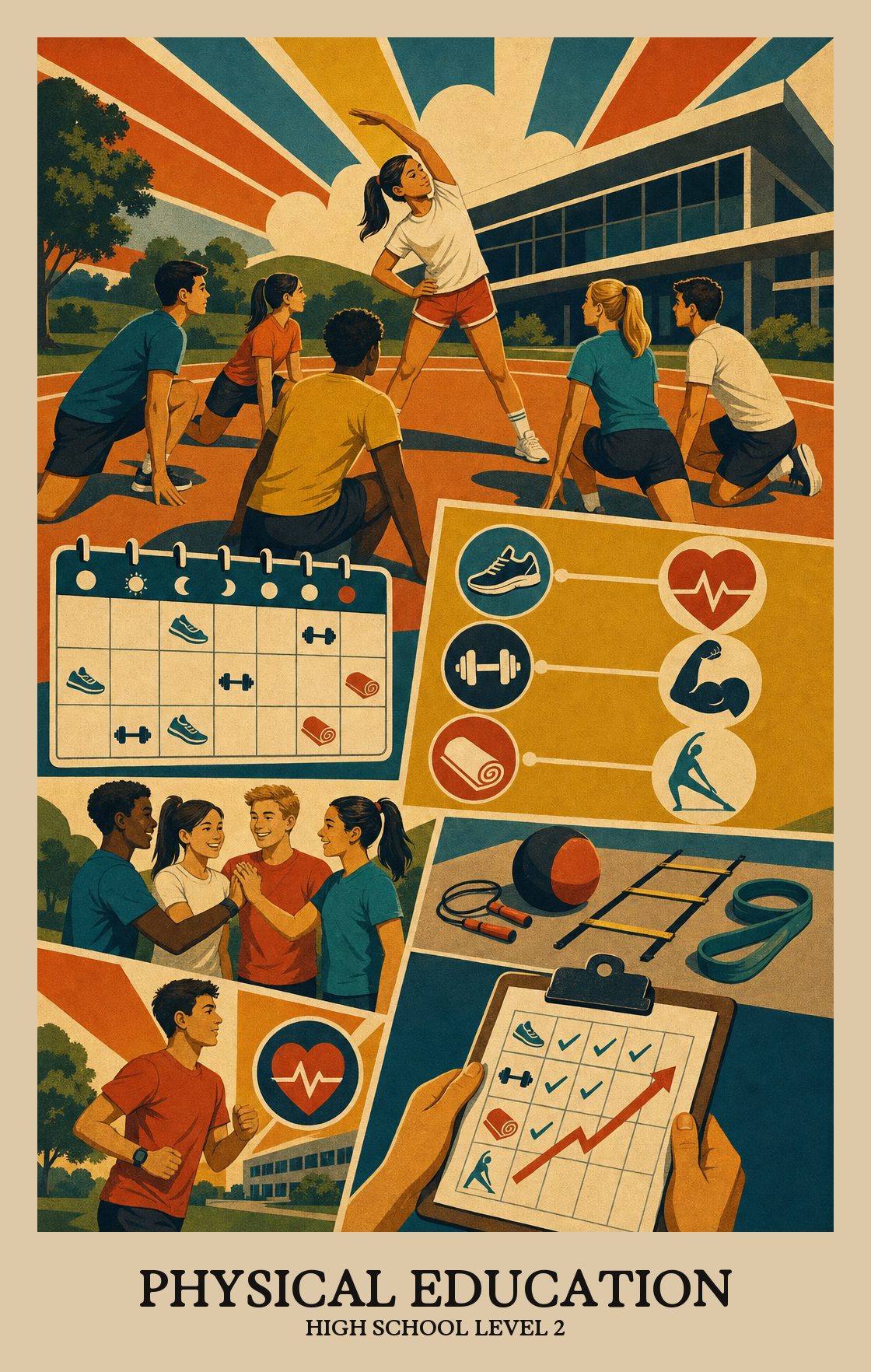
Students take stock of their own fitness and pick goals they want to work toward. They learn how to warm up safely and how to track progress over weeks, not days.
Students practice the moves behind common sports, like passing, defending, and finding open space. They also work on playing fair, talking to teammates, and handling wins and losses.
Students dig into the parts of fitness that affect long-term health, including heart health, strength, and flexibility. They learn how to plan a workout and adjust it as they get stronger.
Students try activities they can keep doing as adults, such as hiking, yoga, weight training, or recreational sports. They reflect on which ones fit their interests and daily routines.
Students practice moving, balancing, and controlling objects like balls and equipment in ways that carry over to real sports and activities. The goal is building a range of physical skills students can use for life.
Students use what they know about how the body moves and recovers to make smarter choices during workouts and games. That means adjusting effort, form, or pacing based on what the activity actually demands.
Students practice working with others during physical activities: taking turns, listening, and adjusting their behavior so the group can succeed together.
Students reflect on why movement matters to them personally and build a habit of regular physical activity they can keep up long after graduation.
| Standard | Definition | Code |
|---|---|---|
| Develop a variety of motor skills, including locomotor, non-locomotor High School Level 2 | Students practice moving, balancing, and controlling objects like balls and equipment in ways that carry over to real sports and activities. The goal is building a range of physical skills students can use for life. | CT-PE.1.hs-level-2 |
| Apply knowledge related to movement, performance High School Level 2 | Students use what they know about how the body moves and recovers to make smarter choices during workouts and games. That means adjusting effort, form, or pacing based on what the activity actually demands. | CT-PE.2.hs-level-2 |
| Develop social skills through movement, including respect for self and others… High School Level 2 | Students practice working with others during physical activities: taking turns, listening, and adjusting their behavior so the group can succeed together. | CT-PE.3.hs-level-2 |
| Develop personal skills, identify personal benefits of movement High School Level 2 | Students reflect on why movement matters to them personally and build a habit of regular physical activity they can keep up long after graduation. | CT-PE.4.hs-level-2 |
Students move past learning basic skills and start using them in real activities like team sports, fitness routines, dance, or outdoor games. They also learn how exercise affects the body and start building habits they can keep after high school.
Pick something active to do together a few times a week, like walking after dinner, shooting hoops, biking, or yard work. Students this age benefit most when adults treat movement as a normal part of life rather than a chore.
Sports are only one option. Hiking, yoga, weight training, dance, swimming, martial arts, and biking all count. Helping students try a few different activities makes it easier to find one they will keep doing on their own.
A common arc moves from fitness baselines early in the year, into team and individual activities, then into personal fitness planning by spring. This lets skill work in the fall feed into student-designed routines later.
Students can perform skills well enough to play and train safely, explain how a workout targets strength, endurance, or flexibility, and describe an activity plan they would actually follow outside of class.
Grades usually focus on effort, participation, skill growth, and personal goal setting rather than raw athletic ability. A student who improves their mile time or sticks with a plan can earn strong marks without being the fastest in class.
Heart rate zones, the difference between strength and endurance work, and how to design a balanced workout tend to need a second pass. Cooperative behavior in competitive games also benefits from regular check-ins.
Ask what part feels hard, whether it is changing clothes, being watched, or struggling with a specific skill. Practicing low-pressure activities at home, like jogging or playing catch, builds confidence before it shows up in class.
They can set a fitness goal, build a simple plan to reach it, track their progress, and adjust when something is not working. They also know how to use a gym, a trail, or a home space safely on their own.